
What Would Make You Change Your Mind?
Updated: 2 days ago
A confident position should come with a reason for holding it. An honest position should also leave room for evidence to change it.
This is a practical TVN exercise, not a test that guarantees anyone's conclusion is correct.

A researcher at The National Archives in Kew, June 4, 2008. Archival illustration of consulting original records. Photo: The National Archives. Image unmodified; no endorsement implied. Photo source · CC BY 3.0
Write a Claim That Can Be Checked
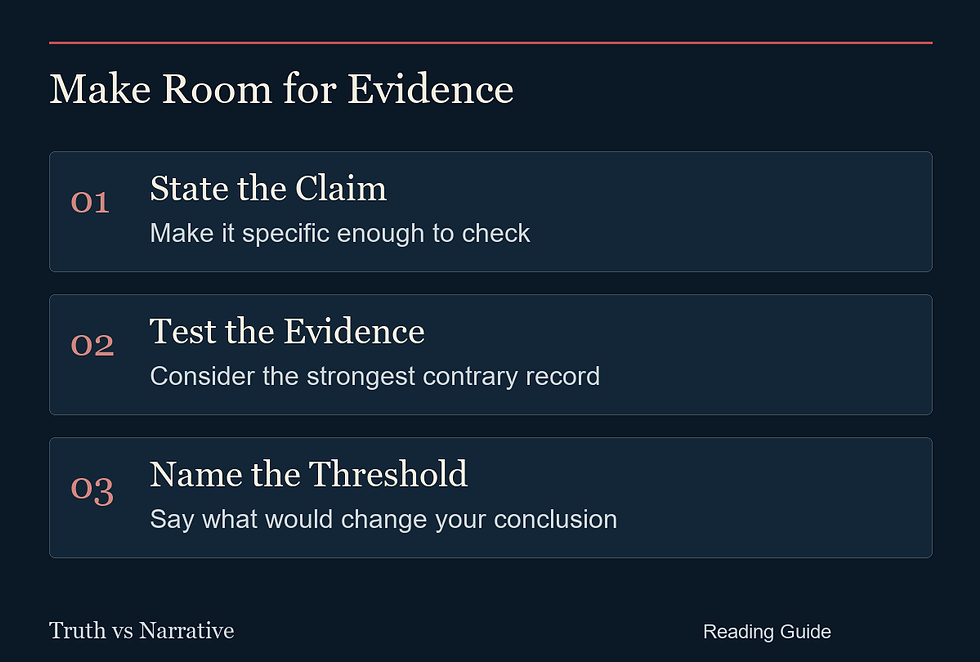
Start with one sentence. Name the actor, action, period and relevant measure where those details matter.
“The policy failed” is too broad to test on its own. “The policy did not meet its stated processing-time target during this period” identifies a record worth looking for.
Do not make the claim more precise than the evidence allows. Precision includes stating uncertainty.
Name the Strongest Contrary Evidence
Look for the strongest relevant challenge, not the easiest opponent to ridicule. Ask whether it addresses your actual claim and whether its source can be checked.
A document may be authentic while still failing to establish the interpretation attached to it. An opposing interpretation may be reasonable without being conclusive.
Keeping those distinctions visible is part of the exercise.
Finish the Sentence
Write: “I would revise my view if...”
Then identify something observable: an authenticated record, a comparison that uses consistent definitions, a correction to a central fact, or a prediction that fails.
The standard should be demanding enough to matter and realistic enough to be met. Requiring impossible proof from a critic while accepting weak support for your own position is not an evidence standard.
Use the Same Test on TVN
Readers should be able to trace a factual claim to its supporting material and see which parts are analysis. If an error changes a conclusion, the correction should explain that effect.
The exercise is three lines: my claim; the strongest relevant challenge; what would change my conclusion. You can keep a strong view after doing it. You should be better able to explain why.
Further Reading
This exercise is original TVN editorial guidance. See What Counts as a Receipt? and TVN's approach to evidence and corrections.
Try the Source Lab worksheet
Choose one specific claim. Write your current confidence, the best supporting evidence, the strongest contrary evidence, what would make you revise the claim, and when you will check it again. A confidence percentage is your personal estimate, not a scientific measurement.
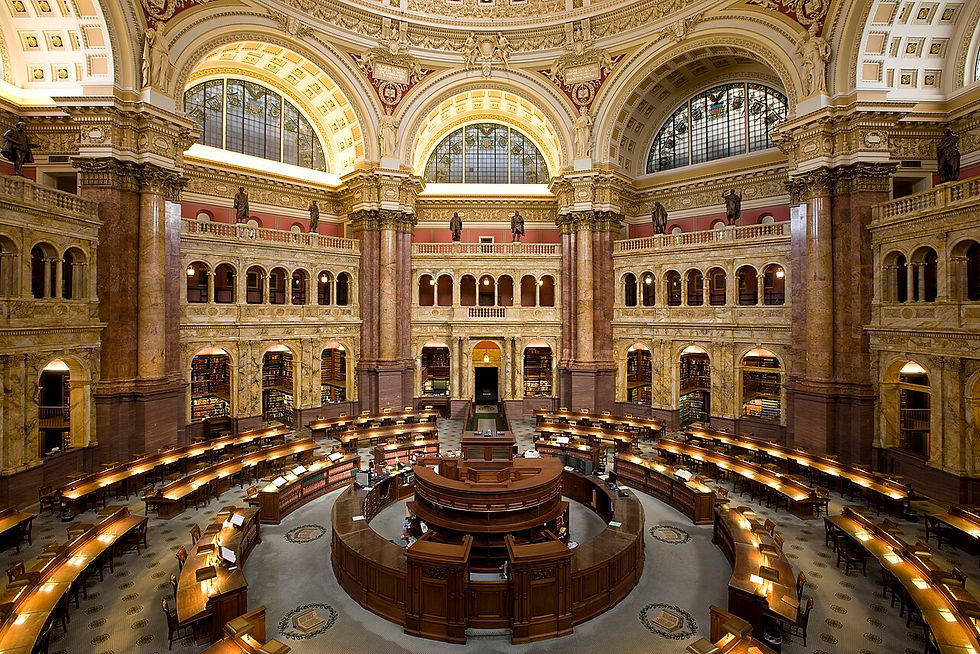
Companion Source Lab social worksheet photograph: Main Reading Room, Library of Congress Thomas Jefferson Building, Washington, D.C., 2007. Carol M. Highsmith / Library of Congress, Prints and Photographs Division. Archival illustration; cropped and combined with TVN worksheet graphics. The Library records no known restrictions on publication.
Read next
Take your evidence test into a discussion while keeping disagreement focused on the claim.

Comments